P0171 Code: System Too Lean (Bank 1) | Causes, Symptoms & How to Fix It

Your check engine light comes on, you plug in a scanner, and it comes back with P0171. Before you start replacing parts, it helps to know that this code can come from a dozen different places, and guessing wrong means paying for something that was never broken. Here’s what P0171 actually means, how serious it is, and how to narrow down the real cause before you spend a dollar.
What Does the P0171 Code Mean?
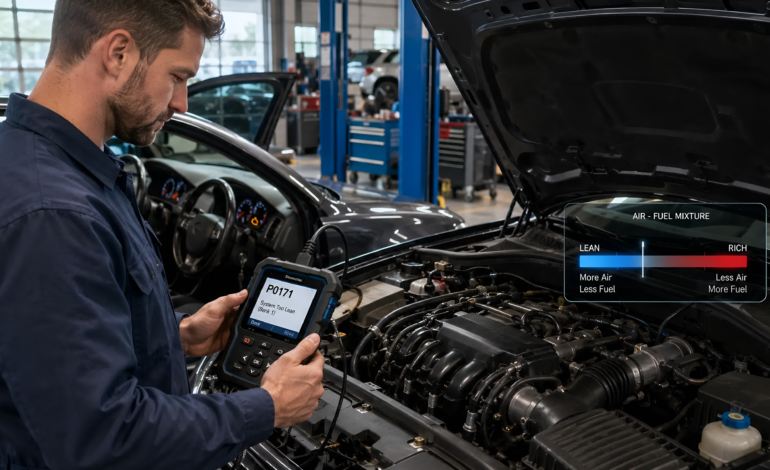
P0171 means your engine’s computer has detected too much oxygen, or not enough fuel, in the air-fuel mixture on Bank 1. This is known as a lean condition.
Here’s the mechanism behind it: an oxygen sensor near the engine constantly measures how much unburned oxygen is left in the exhaust. That reading gets sent to the engine control module, which adjusts how much fuel it injects to try to correct the balance. When the ECM has to add more fuel than it’s designed to add, and the mixture is still too lean, it stores the P0171 code and turns on the check engine light.
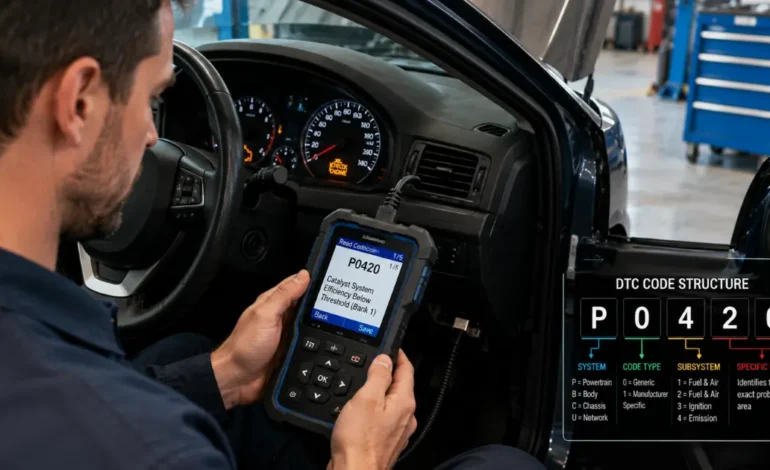
P0171 is a generic code, meaning it’s defined by the SAE standard and means the same thing no matter what you drive. If you’re new to reading these codes, our guide to car diagnostic codes breaks down exactly how the 5-character format works and what each part means. What does change from vehicle to vehicle is exactly where Bank 1 is located and what’s most likely causing it, which is why “just replace the sensor” advice online often misses the mark.
The Clean Air Act requires OBD systems on every vehicle built from 1996 onward specifically so problems like this one can be caught and corrected before they increase vehicle emissions.
What Does “Bank 1” Actually Mean?
Bank 1 refers to the side of the engine that contains cylinder number 1.
If you’re driving a 4-cylinder or any inline engine, there’s only one bank, so “Bank 1” simply refers to the whole engine. The distinction only matters on V-type or flat engines (V6, V8, and similar layouts) that have two cylinder heads, one on each side.
Which physical side of the engine is Bank 1 depends entirely on the manufacturer. On some vehicles it’s the side closest to the firewall; on others it’s the side closest to the front of the car. There’s no universal rule, so if you need to physically locate Bank 1 for a repair, check your vehicle’s specific service documentation rather than assuming.
This Varies by Vehicle
Before going further, it’s worth being upfront about something most guides skip: P0171 causes, Bank 1 location, and even typical repair cost can differ meaningfully depending on your make, model, and engine. A P0171 on a four-cylinder sedan is often traced to a simple vacuum leak. The same code on a V8 truck might point somewhere else entirely.
If you want to narrow things down faster, look up your specific year, make, and model alongside the code, or check for a manufacturer service bulletin related to P0171 on your vehicle. General advice gets you most of the way there, but vehicle-specific documentation gets you the rest of the way.
How Serious Is the P0171 Code?
In the short term, a P0171 code is often drivable, and some vehicles won’t show any noticeable symptoms beyond the check engine light. That doesn’t mean it’s fine to ignore indefinitely.
A lean-running engine burns hotter than it should, which over time can affect the catalytic converter and, in more severe or prolonged cases, contribute to internal engine wear.
If your only symptom is the check engine light and the car drives normally, you have some time to get it looked at. If you’re noticing stalling, a significant loss of power, or rough idling, treat it as something to address soon rather than something to put off.
Common Symptoms of the P0171 Code
- Check engine light illuminated
- Rough or erratic idle
- Hesitation or stumbling during acceleration
- Reduced fuel economy
- Occasional stalling, particularly at idle
- No noticeable symptoms at all, in some cases, beyond the light itself
A lean-running engine is one of several issues that can quietly eat into your mileage. The U.S. Department of Energy notes that addressing a check engine light promptly can help protect your fuel economy rather than letting the problem linger.
What Causes the P0171 Code?
Because a lean condition can stem from either too much air or too little fuel, the list of possible causes spans several different systems. Here’s how they break down.
Air Intake Issues
- Vacuum leaks from cracked or loose hoses, a bad intake manifold gasket, or a leak in the PCV system
- A damaged or poorly seated intake boot between the air filter box and throttle body
Sensor Issues
- A dirty or failing mass airflow (MAF) sensor sending inaccurate air readings to the ECM
- A worn or faulty oxygen sensor giving an incorrect reading
Fuel Delivery Issues
- A clogged fuel filter restricting flow
- A weak or failing fuel pump
- Dirty or partially clogged fuel injectors
- A faulty fuel pressure regulator
Exhaust Issues
- An exhaust leak upstream of the oxygen sensor, which pulls in outside air and tricks the sensor into reading a lean condition that isn’t actually coming from the intake or fuel system
How to Diagnose the P0171 Code
Step 1: Confirm the code and check for related codes.
Scan the vehicle and note whether P0171 is the only code present, or whether it’s accompanied by others like P0172, P0174, P0170, or a misfire code in the P0300 range. Related codes narrow things down considerably. A P0171 alongside a MAF sensor code, for example, points you toward the sensor first rather than starting with a fuel system teardown.
Step 2: Do a basic visual and audio inspection.
With the engine running, listen for a hissing sound near the intake, which often points to a vacuum leak. Visually inspect hoses, the intake boot, and accessible gasket areas for cracks or looseness.
If you’d rather see this play out on a real engine, this walkthrough covers checking the intake hose, the MAF sensor, and the areas most likely to cause a lean condition:
Step 3: Pull live fuel trim data.
If the basic checks don’t turn up an obvious cause, the next step is watching how the ECM is adjusting fuel delivery in real time. This is where a lot of the real diagnostic work happens, and it’s worth understanding on its own.
Reading Fuel Trim Data: A Worked Example
Fuel trim is the percentage by which your ECM is adjusting fuel delivery to correct the air-fuel mixture. A positive number means it’s adding fuel to compensate for a lean reading. A negative number means it’s pulling fuel back because the mixture is running rich.
There are two fuel trim values worth watching:
- Short-term fuel trim reflects the immediate, real-time adjustment happening right now
- Long-term fuel trim reflects the adjustment trend over a longer period, accounting for different driving conditions
On a healthy engine, both values typically stay within roughly plus or minus 10 percent. Once fuel trim consistently exceeds that range, particularly on the positive side, it’s a sign the ECM is compensating for a real lean condition, which is exactly what triggers the P0171 code.
Here’s how that data can help you narrow down the cause, using sample readings at idle versus a moderate RPM:
| Engine Condition | Short-Term Fuel Trim (Bank 1) | Long-Term Fuel Trim (Bank 1) | What It Suggests |
| Idle | High positive (teens or higher) | High positive | Engine is compensating heavily at low airflow |
| Moderate RPM (around 3,000) | Drops closer to normal range | Stays elevated | Points toward a vacuum leak, since leaks have more impact at idle and less at higher airflow |
| Idle and moderate RPM | Stays high at both | Stays high at both | Points toward a fuel delivery issue, since the shortage doesn’t improve as airflow increases |
If your short-term trim drops back toward normal as RPM increases, focus your search on vacuum leaks: the intake boot, hoses, and manifold gasket. If the trim stays elevated no matter the RPM, the issue is more likely with fuel delivery: the fuel pump, filter, injectors, or pressure regulator.
How to Fix the P0171 Code
There’s no single fix for P0171, since the right repair depends entirely on what your diagnosis turns up. Once you’ve narrowed down the cause, common repairs include the following:
- Replacing or resealing a cracked vacuum hose or intake manifold gasket
- Cleaning or replacing a dirty or failing MAF sensor
- Replacing the fuel filter
- Replacing a weak fuel pump
- Cleaning or replacing clogged fuel injectors
- Replacing a faulty fuel pressure regulator
- Replacing a worn oxygen sensor
- Repairing an exhaust leak upstream of the oxygen sensor
Repair costs vary widely depending on the part, your specific vehicle, and local labor rates, so it’s worth getting a quote from a shop once you know which component is actually at fault rather than assuming the most expensive cause first.
If you do need a shop for the repair, the FTC has straightforward guidance on how to choose a reputable repair shop and understand your rights as a customer before you commit to any work.
Related Diagnostic Codes
- P0174 – the same lean condition, but on Bank 2 instead of Bank 1
- P0170 – a general fuel trim malfunction code, often stored alongside P0171
- P0172 / P0175 – the opposite condition, where the engine is running too rich
- P0300–P0308 – misfire codes that can appear alongside P0171, since a lean-running engine is more prone to misfiring
Frequently Asked Questions
What does P0171 mean?
It means your engine control module has detected a lean air-fuel mixture, either too much air or not enough fuel, on the side of the engine containing cylinder 1.
Is P0171 serious?
It’s not usually an emergency, but it shouldn’t be ignored long-term. A prolonged lean condition can affect the catalytic converter and, in some cases, contribute to engine wear.
Can I still drive with a P0171 code?
In many cases, yes, especially if you’re not noticing performance symptoms. If you’re experiencing stalling, rough idling, or a real loss of power, it’s worth getting looked at sooner rather than later.
What’s the difference between P0171 and P0174?
They’re the same issue: a lean fuel mixture, just on opposite sides of the engine. P0171 is Bank 1; P0174 is Bank 2.
Can a bad catalytic converter cause P0171?
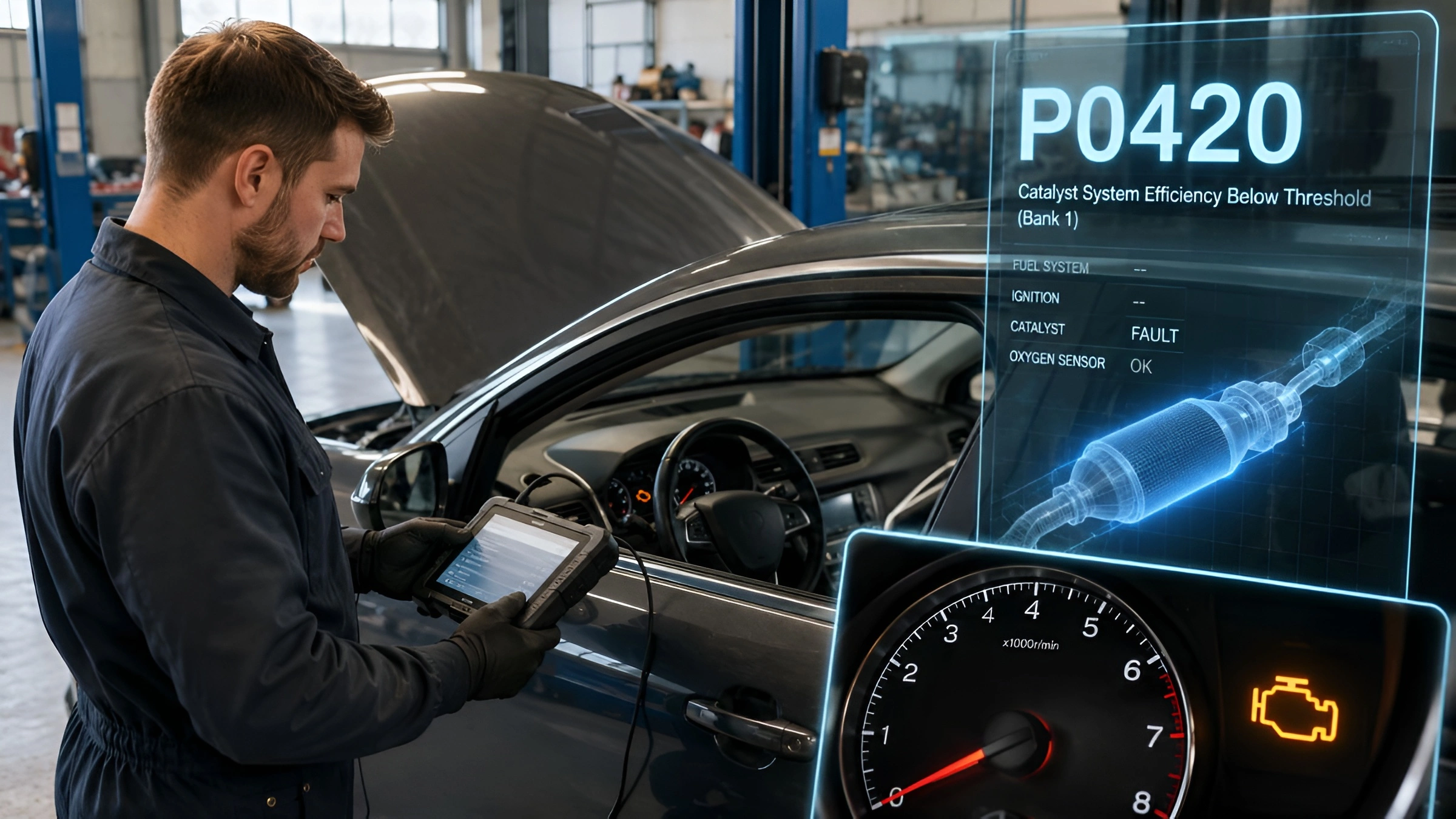
Not directly. A failing catalytic converter is more commonly linked to codes like P0420 or P0430. P0171 is almost always tied to an intake, sensor, fuel delivery, or exhaust issue upstream of the converter.
How much does it cost to fix P0171?
It depends entirely on the cause. A vacuum hose repair is generally inexpensive, while a fuel pump replacement costs significantly more. Get a diagnosis first so you’re pricing the actual repair, not guessing.