P0420 Code: What It Means, How Serious It Is, and How to Fix It

Your check engine light comes on, you plug in a scanner, and it reads P0420. Some shops jump straight to “you need a new catalytic converter,” which can mean a repair bill running into the hundreds of dollars. But a P0420 code doesn’t always point to a failed converter, and knowing what’s actually behind it can save you from paying for a repair you didn’t need.
What Does the P0420 Code Mean?
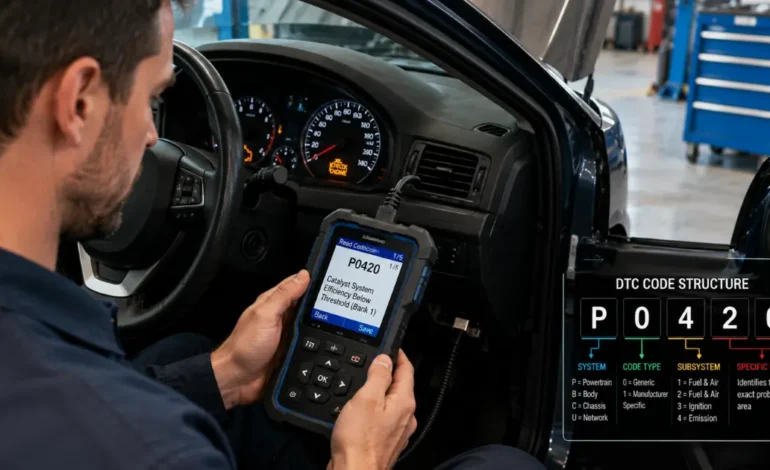
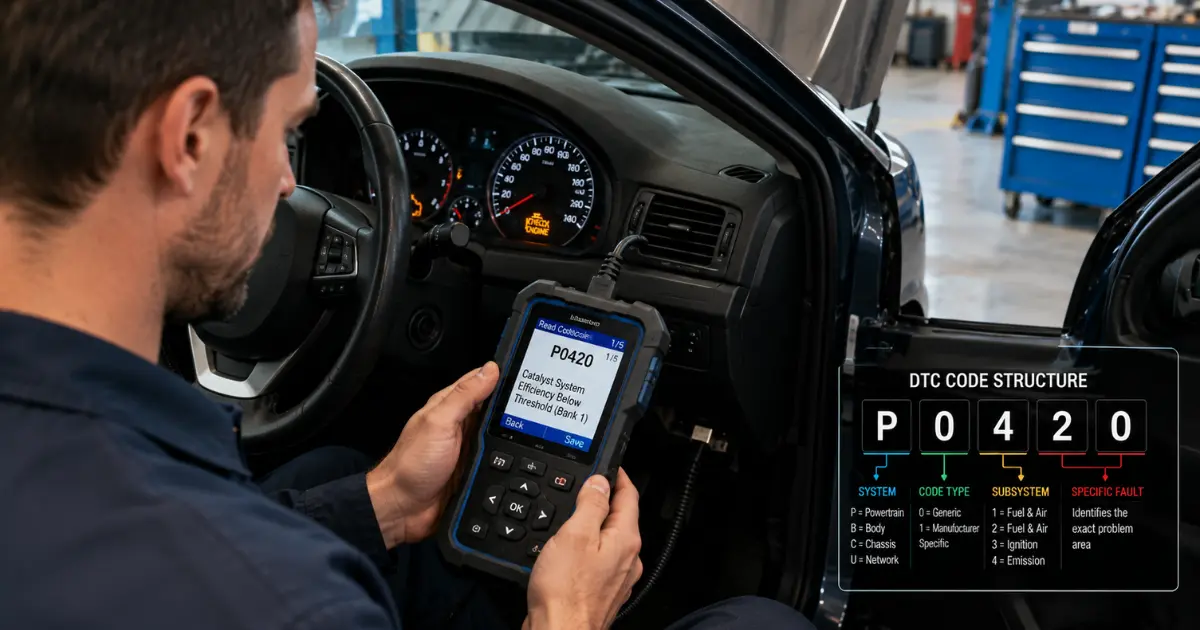
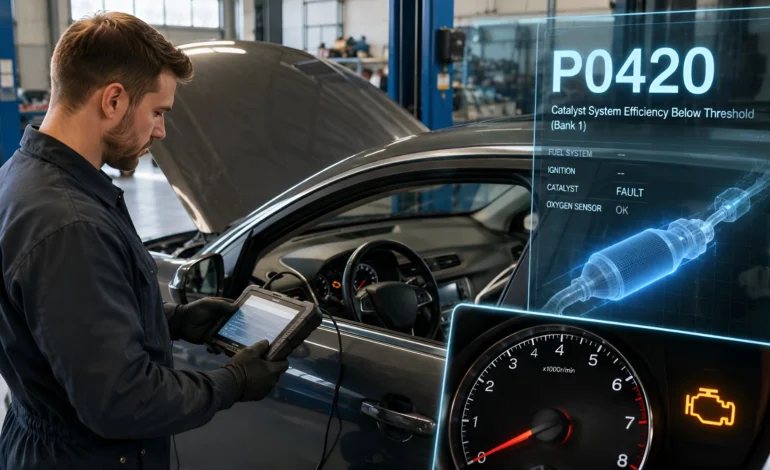
P0420 stands for “Catalyst System Efficiency Below Threshold (Bank 1).” Your car’s engine computer, the ECU, tracks how well the catalytic converter is cleaning up exhaust gases by comparing readings from an oxygen sensor placed before the converter and another placed after it.
Bank 1 simply refers to the side of the engine that contains cylinder number one, which matters mainly on V6 and V8 engines that have two separate exhaust banks. If you’re new to reading these codes in general, our guide to car diagnostic codes breaks down exactly how the 5-character format works, including what “Bank 1” and “Bank 2” mean across the board.
When those two readings look too similar, the ECU concludes the converter isn’t doing its job efficiently, and it triggers the P0420 code. Bank 1 simply refers to the side of the engine that contains cylinder number one, which matters mainly on V6 and V8 engines that have two separate exhaust banks.
The catalytic converter itself exists to convert carbon monoxide, unburned hydrocarbons, and nitrogen oxides into less harmful gases before they leave your exhaust system. When it’s not converting these gases properly, your car pollutes more than it should, even if you can’t tell from behind the wheel.
Is a P0420 Code Serious? Can You Still Drive With It?
In most cases, yes, you can keep driving on a P0420 code, and the engine itself will keep running normally. This is an emissions problem first, not usually a breakdown risk, so a lot of drivers reasonably choose to keep the car running until they can get it looked at.
If you live in a state with mandatory vehicle emissions testing, a P0420 code will likely result in a failed inspection, so it’s worth addressing before your renewal is due.
If you don’t live in an area with emissions testing, many drivers wait for a convenient time to get it checked out, and plenty of vehicles run for tens of thousands of miles with this code active and no other issues.
Pay closer attention if the check engine light is flashing rather than staying steady or if you notice a rattling noise from underneath the car or a strong sulfur smell from the exhaust.
Those signs usually point to something more active going on, like a misfire that’s actively damaging the converter, and that’s worth getting looked at sooner rather than later.
Common Symptoms of a P0420 Code
- The check engine light turns on and stays on
- Lower fuel economy than usual
- Reduced acceleration or a feeling of sluggishness
- A rotten egg or sulfur smell from the exhaust
- A rattling sound from the converter, if it’s physically damaged inside
It’s worth noting that a lot of drivers notice none of these and only find out through the check engine light itself. The absence of other symptoms doesn’t mean nothing is wrong, but it also doesn’t mean you’re dealing with an emergency.
What Causes a P0420 Code?
There’s a real tendency to blame the catalytic converter first, but several other issues can trigger the exact same code, often for a lot less money to fix.
| Cause | How common | DIY-friendly | Urgency |
| Worn or failing oxygen sensor | Very common | Yes | Medium |
| Exhaust leak near the sensor | Common | Sometimes | Medium |
| Damaged or worn catalytic converter | Common | No | High |
| Engine misfire (spark plugs, fuel injectors) | Less common | Sometimes | High |
| Oil consumption fouling the converter | Less common | No | Medium |
An oxygen sensor that’s giving inaccurate readings can make a perfectly fine converter look inefficient to the ECU. The same goes for a small exhaust leak near the sensor, which lets extra outside air in and throws off the readings the ECU relies on.
An engine that’s misfiring sends unburned fuel into the converter, which can damage it over time even if the converter itself started out fine. And an engine that burns oil can gradually coat and clog the converter from the inside, which tends to bring the code back even after a replacement if the oil consumption isn’t dealt with first.
How to Diagnose a P0420 Code Step by Step
- Confirm the code with an OBD-II scanner, and check whether any other codes came up alongside it, especially P0300 (cylinder misfire), P0171 (system too lean), or P0430 (the same issue on the other engine bank).
- Visually inspect the exhaust system for cracks, loose connections, or obvious damage, particularly around the joints near the oxygen sensors and converter.
- Test the oxygen sensors upstream and downstream of the converter to see whether they’re giving accurate, responsive readings.
- Check for engine misfires or fuel system issues, since these can trigger a P0420 code even when the converter itself is fine.
- Have a shop run a catalytic converter efficiency test if the steps above don’t turn up a clear cause. This usually requires equipment beyond a basic code reader.
If you’d rather see this diagnostic process carried out on a real vehicle, this walkthrough covers each step from confirming the code to testing the sensors.
The first two steps are realistic for a driver who’s comfortable working under the hood. The rest generally require a scan tool with live sensor data or a mechanic’s diagnostic equipment, so this is a good point to bring the car in if you don’t already have that gear.
How to Fix a P0420 Code
The right fix depends entirely on what’s actually causing it, which is why skipping straight to a converter replacement can mean spending money you didn’t need to.
- Replace a faulty oxygen sensor. This is usually the least expensive fix and resolves the code when a sensor is the actual cause.
- Repair exhaust leaks. Sealing or replacing a damaged section of exhaust near the sensors often clears the code on its own.
- Address engine misfires. Worn spark plugs, failing ignition coils, or dirty fuel injectors all fall into this category and are worth ruling out before touching the converter.
- Replace the catalytic converter, but only after the causes above have been checked. If the converter genuinely has failed, this is the fix that resolves it.
A quick, honest note on catalytic converter cleaning products: some drivers report the code clearing for a while after using one, particularly when the cause is light fouling rather than physical damage. Treat this as a temporary measure at best. If there’s an underlying cause like an oil-burning engine or an unresolved misfire, the code tends to come back.
What Does a P0420 Repair Cost?
Costs vary by vehicle and by what’s actually wrong, but here’s a general sense of where the money goes:
- Oxygen sensor replacement: typically the least expensive of the likely fixes, and often a straightforward job
- Exhaust leak repair: Ranges from a simple gasket or clamp fix to a more involved repair, depending on where the leak is
- Catalytic converter replacement: the most expensive option by a wide margin, since converters contain precious metals like platinum and palladium
- Labor: varies by shop and region, and adds to any of the above
If you live in a state with strict emissions requirements, such as California, your vehicle may need a CARB-compliant converter rather than a standard federal one, which usually costs more but is required to pass inspection legally.
How to Prevent a P0420 Code From Coming Back
Replacing a part without addressing what caused it to fail in the first place is the most common reason this code returns. A new catalytic converter installed over an engine that’s still misfiring, or still burning oil, will likely end up right back where it started.
- Address engine misfires and worn ignition components promptly rather than letting them linger
- Have oxygen sensors checked periodically, since they naturally wear out over time
- Use good-quality fuel to avoid buildup that can affect sensor readings and converter performance
- Keep up with regular engine maintenance, since a well-running engine puts far less stress on the exhaust system
Frequently Asked Questions
Is P0420 the same as P0430?
They’re the same issue on opposite sides of the engine. P0420 refers to Bank 1 (the side with cylinder one), and P0430 refers to Bank 2. Both mean the catalytic converter on that bank isn’t converting exhaust gases efficiently.
How long can I drive with a P0420 code?
Many drivers continue driving normally for an extended period with no other symptoms, since this is primarily an emissions issue rather than a drivability one. Get it checked sooner if you notice a flashing check engine light, a rattling noise, or a strong sulfur smell, since those can signal a more active problem.
Will a P0420 code fail an emissions test?
Yes, in areas with mandatory emissions or smog testing, an active P0420 code will typically cause a failed inspection. It’s worth resolving before your test is due.
Can a catalytic converter cleaner actually fix P0420?
It can sometimes clear the code temporarily, especially with light fouling, but it doesn’t address an underlying issue like a misfire or oil consumption. Treat it as a short-term measure, not a permanent repair.
Does P0420 always mean the catalytic converter needs replacing?
No. Oxygen sensor failures and exhaust leaks trigger this same code and are both less expensive to fix. Ruling those out first can save you from an unnecessary converter replacement.
A P0420 code is common, and in most cases, it’s not an emergency. What matters more than the code itself is finding the actual cause behind it, since that determines whether you’re looking at a simple sensor swap or a full converter replacement.
If you’re not confident diagnosing it yourself, a qualified mechanic can run the right tests and tell you exactly what you’re dealing with before you spend a dollar on parts.