After Analyzing 9 Top AI Search Guides, Here’s How to Actually Rank in LLMs

Your rankings haven’t moved, but your traffic has. That’s because more buyers are asking ChatGPT and Gemini for recommendations instead of clicking through search results.
Most advice on “LLM SEO” online is either recycled traditional SEO or vague hype about files like llms.txt. This guide breaks down what’s actually driving citations in ChatGPT, Claude, Gemini, and Perplexity right now, based on a structured breakdown of the guides currently ranking on this exact topic.
Key Takeaways
- Ranking in LLMs (often called Generative Engine Optimization, or GEO) builds on traditional SEO rather than replacing it. Weak technical SEO keeps your content out of consideration entirely.
- Large language models retrieve and rank small sections of your page, not the page as a whole, so each section needs to answer one question completely on its own.
- Schema markup, consistent brand naming, and named author credentials help AI systems recognize your brand as a trusted, citable entity.
- Third-party mentions on other sites, including unlinked ones, now carry as much weight as backlinks for AI trust signals.
- llms.txt is worth adding but shouldn’t be treated as a ranking silver bullet. Adoption across AI platforms is still limited.
What Is GEO (Generative Engine Optimization)?
GEO is the practice of structuring your content so AI systems like ChatGPT, Claude, and Gemini can understand it, trust it, and cite it in their answers. It sits alongside terms like Answer Engine Optimization (AEO), but the goal is the same: show up inside the answer itself, not just on a results page beneath it.
GEO isn’t a replacement for SEO. It’s built on top of it. Search engines still determine which websites make it into the pool of trusted sources an AI system can pull from.
If your site has poor technical SEO, thin content, or low authority, an AI model may never consider it in the first place. Traditional SEO gets you into the room. GEO decides whether you’re the one who gets picked once you’re there.
How LLMs Actually Decide What to Cite
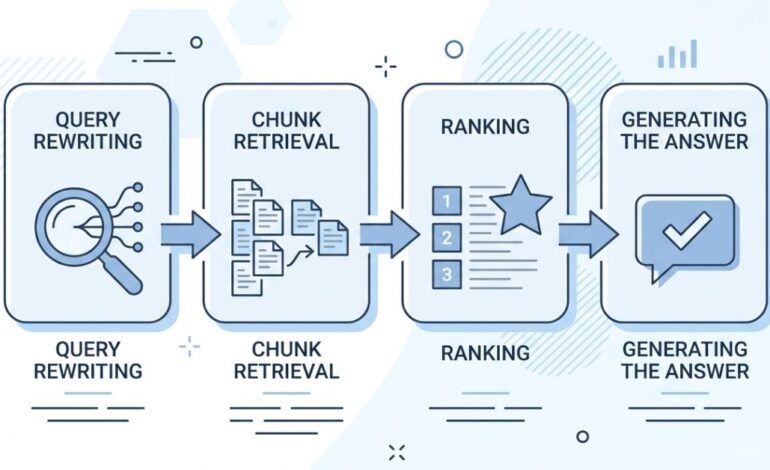
Most AI assistants use a method called Retrieval-Augmented Generation, or RAG. Instead of answering purely from what the model learned during training, it searches for current information first, then builds a response from what it finds. That process happens in four stages, and understanding each one changes how you should structure content.
Stage 1: Query Rewriting
An AI system rarely searches using the exact words a person typed. It expands the question into several related searches behind the scenes, a process sometimes called query fan-out. Someone asking about “AI SEO tools” might trigger internal searches for keyword research tools, technical SEO tools, and content optimization tools, all at once.
This means you shouldn’t write a page that targets one keyword. Cover the full shape of a topic: definitions, comparisons, use cases, objections, and next steps. A page that only answers the exact headline question misses most of the fan-out searches built around it.
Stage 2: Chunk Retrieval
AI systems don’t evaluate a full page the way a person reading top to bottom would. They break content into smaller sections and evaluate each one separately, converting each into a mathematical representation used to measure how well it answers a specific question.
A long article with the answer buried in paragraph twelve performs worse than a page where every section stands on its own. Each heading should cover exactly one idea, with the answer stated up front and the supporting detail following it.
Stage 3: Ranking the Chunks
Once relevant sections are retrieved, the AI compares them against each other for relevance, clarity, and trustworthiness. Freshness plays a role too. When two sources say roughly the same thing, the one with a visibly more recent update tends to win.
Stage 4: Generating the Answer
The model combines the strongest sections from multiple sources into a single response. This is also where a real problem shows up for site owners: an AI system can absorb your content into its answer without ever mentioning where the information came from. The goal of GEO isn’t just to get selected. It’s to get credited.
How Each Major LLM Finds Your Content
Every AI platform pulls from a different source when it needs current information, and that changes what you should prioritize for each one.
| Platform | Search backend | What it tends to prioritize |
| ChatGPT | Bing | Freshness, and content that shows up across multiple related searches, not just one exact-match keyword |
| Claude | Brave Search | Specific, hard-to-paraphrase details like exact numbers and steps, since it tends to cite rather than summarize when precision matters |
| Gemini / Google AI Overviews | Google’s own index | Content that closely matches a specific query’s intent, pulled from pages already indexed in standard Google Search |
| Perplexity | Bing plus its own cache | Sites with established topical depth across multiple connected pages on the same subject |
| Grok | Live signals from X | Timely, conversational content with visible engagement, rather than static web pages |
Because Bing powers a large share of AI-driven search, setting up and verifying your site in Bing Webmaster Tools is worth doing even if you’ve never used it before.
A Four-Layer Framework for Ranking in LLMs
Layer 1: Content Optimization
Start every section with the answer, not the setup. If a heading asks a question, the first sentence underneath it should answer that question in full. Save background and nuance for the sentences that follow.
Keep each section self-contained. One heading, one idea. Mixing a definition, a comparison, and a case study under a single heading makes it harder for an AI system to pull a clean, standalone answer from that section.
Use lists, tables, and direct comparisons wherever they fit naturally. Structured formats are easier for both readers and AI systems to scan and extract than dense paragraphs. Close out key topics with an FAQ section built from complete question-and-answer pairs, since these are some of the easiest chunks for an AI system to lift directly.
Layer 2: Entity Building and Authority
AI systems don’t just evaluate a page. They evaluate the brand and the author behind it. If your company is described one way on your homepage and a different way on your LinkedIn or Crunchbase profile, that inconsistency makes it harder for an AI system to connect the dots and treat your brand as a single, trusted entity.
Keep your brand name, tagline, and core description identical across your site and every public profile. Add real author bios with actual credentials rather than a generic “admin” byline.
This lines up with Google’s E-E-A-T principles (Experience, Expertise, Authoritativeness, and Trustworthiness), which still matter for AI-driven search the same way they matter for standard search rankings.
Structured data helps here too. Adding Organization, Author, Article, and FAQ schema in JSON-LD format won’t force an AI system to cite you, but it removes ambiguity about who created the content and what it covers.
Layer 3: Technical Optimization
If an AI crawler can’t access your page, nothing else on this list matters. Check your robots.txt file to confirm you aren’t accidentally blocking crawlers used by AI search tools. Keep your core content in plain, readable HTML rather than locked behind JavaScript that a crawler might not render.
A quick, honest note on llms.txt: this is a simple text file some site owners are adding to guide AI crawlers toward their most important pages. It’s easy to add and won’t hurt anything.
But treat it as a minor technical addition, not a ranking strategy. Adoption across AI platforms is still limited, and it isn’t a substitute for the content and authority work covered in the other layers.
Freshness matters more for some topics than others. Pricing pages, comparison articles, and anything tied to regulations or fast-changing information benefit from updates every few months. Evergreen explainer content can go longer between refreshes, but a visible “last updated” date still helps.
Layer 4: Off-Site Authority
AI systems weigh what other trusted sites say about your brand more heavily than what you say about yourself. Independent mentions in industry publications, community discussions, and review sites all build the kind of third-party credibility that’s hard to fake.
Backlinks still matter, but they’re no longer the whole picture. A mention of your brand on a trusted site, even without a link back to you, can still register as a trust signal. This is a real shift from how link building used to work, and it means showing up in genuine conversations on platforms like Reddit and Quora is worth the time it takes.
The single highest-leverage move in this layer is publishing original research: your own survey data, your own case studies, your own numbers that nobody else has. Other sites start referencing it, journalists pick it up, and over time your brand becomes the original source that both search engines and AI systems point back to.
Why AI Citations Don’t Always Match Google Rankings
Ranking on page one of Google doesn’t guarantee an AI citation, and it’s worth understanding why. AI systems evaluate retrieved content chunks on their own terms: clarity, structure, and how directly a section answers the question, not just where the full page ranks in traditional search.
A page sitting outside the top ten in Google can still get pulled into an AI answer if a specific section on it answers the question more cleanly than a higher-ranked competitor’s page does.
This is exactly why the four-layer approach above matters more than chasing a single keyword ranking. You’re optimizing for how a section reads on its own, not just how the whole page performs in aggregate.
How to Measure Whether You’re Showing Up in AI Answers
Standard analytics won’t fully capture this. A user who gets their answer directly inside ChatGPT never clicks through to your site, so traditional traffic reports miss that visibility entirely.
Build a short list of real questions your customers actually ask, the kind that would come up in a genuine buying decision. Run those questions through ChatGPT, Claude, Gemini, and Perplexity on a regular schedule, and note whether your brand or content shows up and how it’s described when it does.
Track this over time rather than as a one-off check. What you’re building is a rough measure of AI Share of Voice: how often you show up in relevant AI answers compared to your competitors.
Pair that with referral traffic where it exists (some platforms do pass some clicks through), and treat any spike in unexplained direct or referral traffic as a possible signal of AI-driven visibility.
Frequently Asked Questions
What is the difference between SEO and GEO?
SEO focuses on ranking your web pages in traditional search results. GEO focuses on getting your content selected, understood, and cited inside AI-generated answers. GEO depends on solid SEO fundamentals already being in place.
Does llms.txt actually help you rank in LLMs?
It can help guide AI crawlers to your most important pages, but current adoption across AI platforms is limited. Add it as a minor technical step, not as your main strategy.
How long does it take to get cited by ChatGPT or other LLMs?
There’s no fixed timeline, and it varies by how established your brand already is and how much of the four-layer framework you’ve implemented. Sites with existing authority and consistent brand presence tend to see results faster than brand-new sites starting from nothing.
Do backlinks still matter for ranking in LLMs?
Yes, but they’re no longer the only signal. Unlinked brand mentions on trusted, independent sites now carry real weight alongside traditional backlinks.
Ranking in LLMs starts with the same foundation as ranking anywhere else: content that’s clear, well-structured, and backed by real authority. Traditional SEO decides whether you’re in the pool of sources an AI system can even consider. The four layers above decide whether you’re the one it actually picks.