Car Diagnostic Codes Explained: How to Read, Clear & Understand DTCs

Your check engine light comes on, and suddenly you’re stuck between two bad options: ignore it and hope it’s nothing, or pay a shop just to find out what a five-character code means. Neither one feels right. This guide breaks down exactly what car diagnostic codes are, how to read them yourself, and what to actually do once you know what’s wrong.
What Is a Car Diagnostic Code?
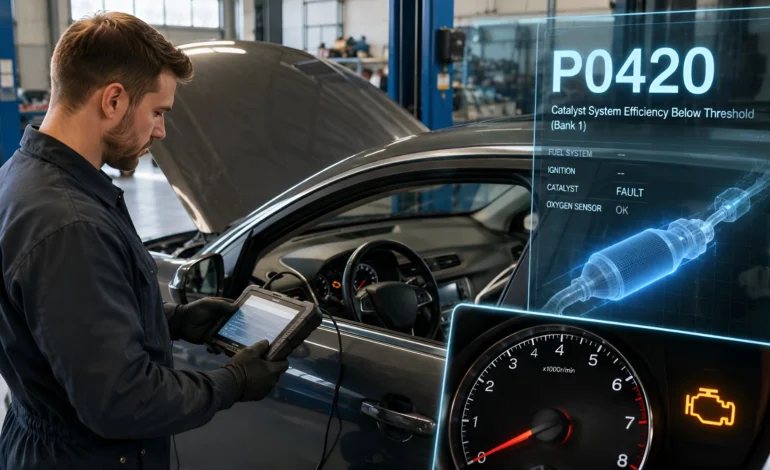
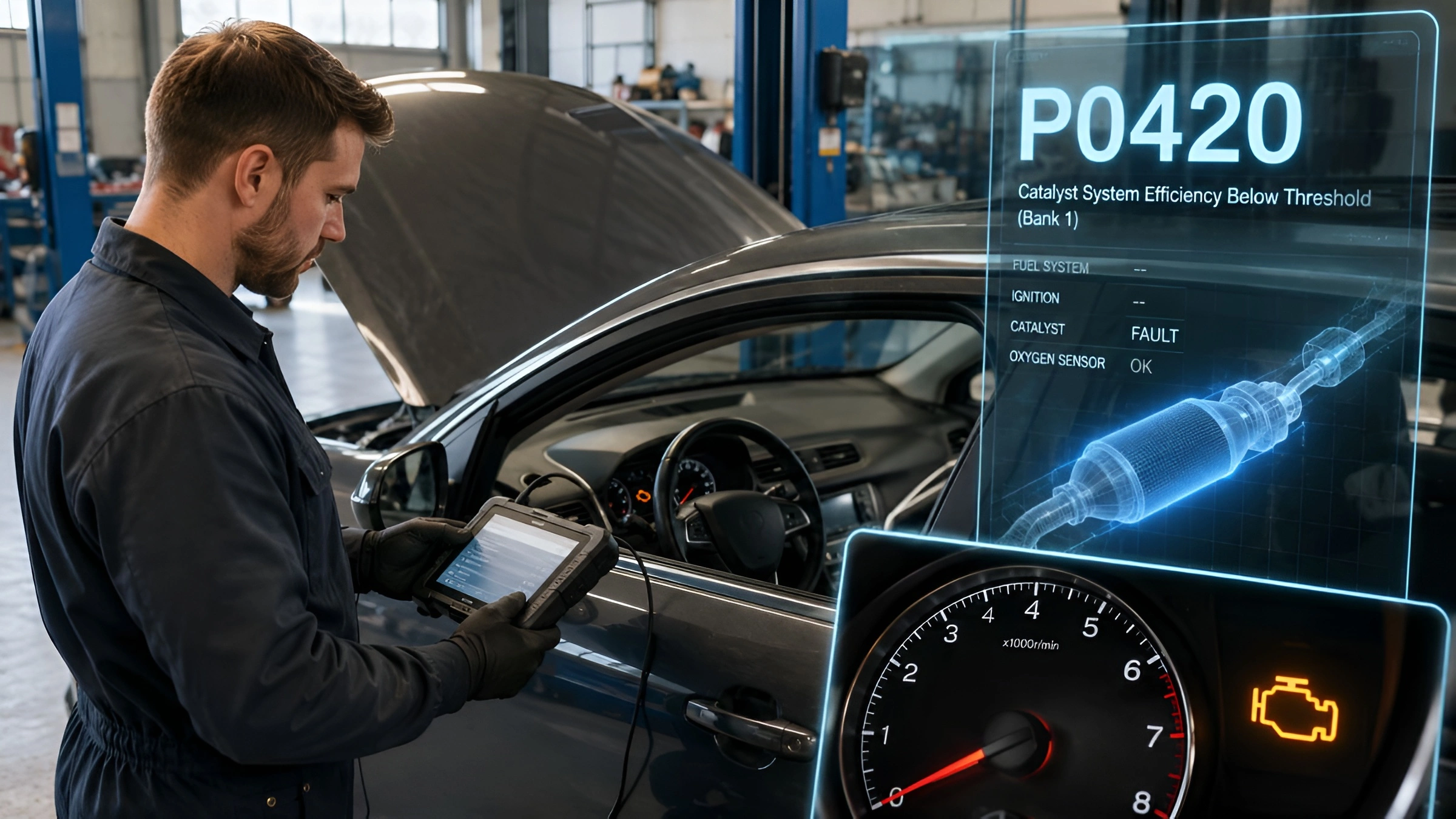
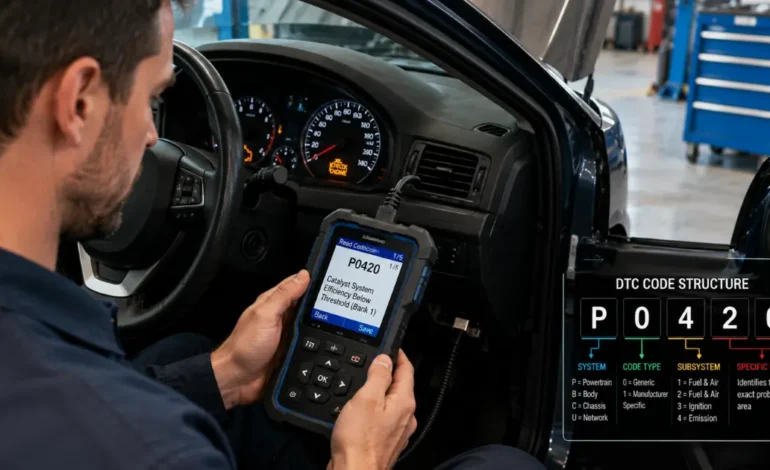
A car diagnostic code, also called a diagnostic trouble code (DTC), is an alphanumeric code your vehicle’s onboard computer generates when it detects a problem with an engine, transmission, emissions, or electrical system. It’s typically five characters long: one letter followed by four numbers, like P0420 or C0035.
These codes were developed by the Society of Automotive Engineers (SAE) so that every automaker could use a shared system for identifying vehicle problems, largely to help cars meet emissions standards under the Clean Air Act. Before this standardization, each manufacturer had its own private code system, which made repairs slower and more expensive.
You’ll see diagnostic codes referred to by several different names depending on who you ask: DTC, fault code, engine code, OBD code, or check engine light code. They all mean the same thing.
How Do Car Diagnostic Codes Work?
Every car built for the US market after January 1, 1996, uses a standardized onboard diagnostics system called OBD-II. Heavy-duty diesel trucks and buses use a related standard called J1939.
Inside your car, the engine control module (ECM), sometimes called the powertrain control module (PCM), constantly monitors dozens of sensors: oxygen sensors, coolant temperature, mass airflow, throttle position, and more. When a reading falls outside its expected range, the ECM logs a diagnostic code and, in many cases, turns on the check engine light on your dashboard.
Every vehicle built for the US market after January 1, 1996 uses a standardized onboard diagnostics system called OBD-II, a requirement originally developed to monitor emissions-related components and alert drivers when something needs attention.
To retrieve that code, you plug a scan tool into your car’s OBD-II port, which is almost always located under the dashboard near the steering column, sometimes tucked just above the pedals. The scanner talks to the ECM and displays the stored code, or codes, since more than one can be present at once.
How to Read a Diagnostic Trouble Code
This is the part that trips most people up, but once you understand the pattern, any code becomes readable at a glance. Each of the five characters tells you something specific. Take P0301 as an example.
First Character: Which System Has the Problem
The first character is always a letter, and it tells you which major system triggered the code.
- P – Powertrain: engine, transmission, fuel system
- C – Chassis: brakes, steering, suspension
- B – Body: airbags, seat belts, power windows, climate control
- U – Network: communication between the car’s onboard computers
Second Character: Generic or Manufacturer-Specific
The second character is a number, almost always 0 or 1.
- 0 means the code is generic, defined by the SAE standard and used the same way across every manufacturer
- 1 means the code is manufacturer-specific, meaning its exact meaning can vary by automaker
- 2 shows up occasionally and depends on the specific system involved
Generic codes make up the large majority of what a basic scanner will pull, which is good news, because it means the code means the same thing whether you’re driving a Honda or a Ford.
Third Character: The Subsystem
When the second character is a 0, the third character narrows things down to a specific subsystem:
- 1 – Fuel or air metering
- 2 – Fuel or air metering, injector circuit
- 3 – Ignition system or misfire
- 4 – Auxiliary emissions controls
- 5 – Vehicle speed or idle control
- 6 – Computer output circuit
- 7 or 8 – Transmission
Fourth and Fifth Characters: The Specific Fault
The last two numbers pinpoint the exact fault within that subsystem. This is the part of the code that’s most specific to your actual problem, and your vehicle’s repair manual, or a reliable code lookup, will give you the precise description.
So a code like P0301 breaks down as: Powertrain (P), generic (0), ignition system or misfire (3), and cylinder 1 specifically (01) Cylinder 1 Misfire Detected.
Types of Diagnostic Codes Explained
Understanding the four code categories helps you gauge how serious a problem might be before you even look up the specific code.
P Codes (Powertrain) cover the engine, transmission, and related components like the fuel system and emissions controls. This is by far the largest category, since it includes everything from a loose gas cap to a failing catalytic converter.
C Codes (Chassis) relate to the mechanical systems outside the passenger compartment, such as brakes, steering, and suspension. These often connect to safety systems like anti-lock brakes, so they’re worth addressing quickly.
B Codes (Body) cover components inside the passenger compartment: airbags, seat belts, power windows, and climate control systems.
U Codes (Network) point to a communication problem between the car’s different onboard computers. These can be confusing because the root cause isn’t always in the system or the code names.
| Code Prefix | System | Example Code | What It Means |
| P | Powertrain | P0420 | Catalyst system efficiency below threshold |
| C | Chassis | C0035 | Left front wheel speed sensor circuit |
| B | Body | B1327 | Battery voltage circuit malfunction |
| U | Network | U0100 | Lost communication with ECM/PCM |
Common Diagnostic Trouble Codes and What They Mean
These are among the most frequently seen codes across everyday vehicles. Keep in mind that while the code itself is generic, the actual repair often depends on your specific make and model, so use this as a starting point rather than a final diagnosis.
| Code | Meaning |
| P0420 | Catalyst system efficiency below threshold (Bank 1) |
| P0430 | Catalyst system efficiency below threshold (Bank 2) |
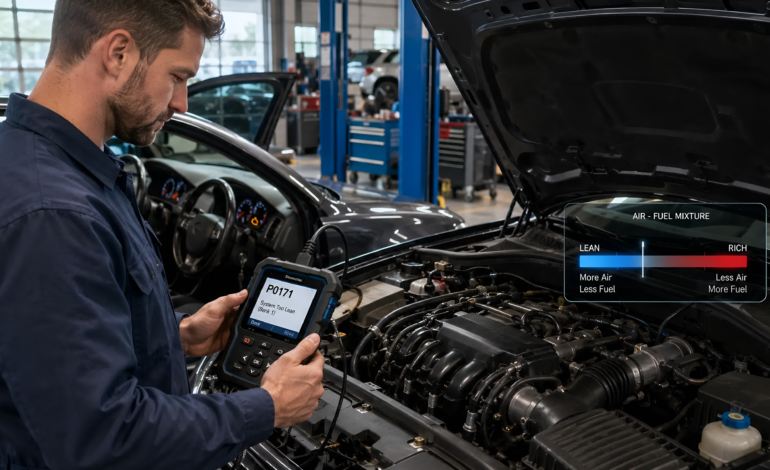
| P0171 | System too lean (Bank 1) |
| P0300 | Random or multiple cylinder misfire detected |
| P0301–P0304 | Misfire detected in a specific cylinder |
| P0128 | Coolant thermostat below regulating temperature |
| P0442 | Small leak detected in the evaporative emission system |
| P0455 | Large leak detected in the evaporative emission system |
| P0101 | Mass airflow circuit range or performance problem |
| U0100 | Lost communication with the engine control module |
A code like P0420 tends to come up often enough that it deserves its own dedicated explanation, since catalytic converter issues can range from a simple sensor fix to a full converter replacement.
The same goes for P0171, a lean-mixture code that can stem from anything as simple as a loose hose to a failing fuel pump.
Are Diagnostic Codes Universal?
Generic codes, the ones where the second character is 0, mean the same thing regardless of the vehicle’s make. A P0300 misfire code means the same thing on a Toyota as it does on a Chevrolet.
Manufacturer-specific codes are different. These are defined by the individual automaker and can vary in meaning from one brand to the next, even when the code format looks similar. If your scanner pulls a code and the second character is a 1, it’s worth checking your specific manufacturer’s documentation or a shop that specializes in your brand.
Generic codes exist because federal regulation requires OBD systems to detect malfunctions and store standardized trouble codes that any compliant scan tool can read, regardless of the vehicle’s manufacturer.
It’s also worth being upfront about something: a diagnostic code points you toward a system or component, but it doesn’t always tell you the exact cause. A misfire code, for example, could mean a bad spark plug, a failing ignition coil, a fuel delivery issue, or something else entirely connected to that cylinder. The code narrows the search; it doesn’t always finish it.
How to Check and Read Your Car’s Diagnostic Codes at Home
You don’t need a mechanic just to find out what code your car is throwing. Here’s the general process:
- Locate the OBD-II port. It’s typically under the dashboard on the driver’s side, though placement varies slightly by make.
- Plug in a scan tool. This can be a basic handheld code reader or a Bluetooth adapter paired with an app on your phone.
- Turn the key to the “on” position (you usually don’t need to start the engine).
- Retrieve the code. The scanner will display one or more codes stored in the ECM.
- Look up what the code means using your scanner’s built-in database, your owner’s manual, or a trusted reference guide like this one.
Many auto parts stores also offer free code reads if you don’t want to buy a scanner yourself, though this typically just tells you the code, not a full diagnosis of the underlying problem.
How to Clear Car Diagnostic Codes
Once you understand the issue, or you’ve already had it repaired, clearing the code turns off the check engine light. There are two common ways to do this:
- Use your scan tool’s clear or reset function. Most code readers have a dedicated button for this once the codes are displayed.
- Disconnect the battery. This resets the ECM but can also reset other settings, like radio presets or adaptive transmission behavior, so it’s usually better to use a scanner instead.
One important note: clearing a code doesn’t fix whatever triggered it. If the underlying issue is still there, the code will come back, often within a short drive cycle. Clearing a code should follow a repair, not replace one.
Do I Need a Professional Diagnostic, or Can I DIY?
A basic code reader is enough for a lot of situations, especially if you’re comfortable interpreting the result and doing your own research or repairs. But there are times a professional diagnostic makes more sense.
It’s worth understanding the difference between a diagnostic test and a routine inspection. A diagnostic test specifically investigates a triggered code or a reported symptom, using the code as a starting point to narrow down the actual mechanical or electrical cause.
An inspection, on the other hand, is a broader check of your vehicle’s overall condition, often required for registration or as part of routine maintenance, and doesn’t necessarily involve reading codes at all.
If a code points to something safety-related, like a chassis or brake system issue, or if you’ve cleared a code and it keeps returning, it’s worth having a professional take a look. Diagnostic costs vary widely depending on your location, the shop, and the complexity of the issue, so it’s worth calling ahead to ask about pricing before you commit.
Before paying for a diagnostic on a safety-related code, it’s also worth taking a minute to check your vehicle for open recalls using your VIN, since some issues are covered as a free manufacturer repair.
Choosing a Diagnostic Code Reader or Scanner
If you’re shopping for your own scanner, the right choice depends on how deep you want to go.
Entry-level readers: Are affordable and handle the basics well: pulling generic codes, showing a description, and clearing codes. These are a solid choice if you mostly want to know what’s wrong before deciding whether to fix it yourself or head to a shop.
Professional-grade scanners: Go further, offering live sensor data, bidirectional control (letting you actually trigger certain components to test them), and broader support for manufacturer-specific codes. These make sense if you do your own repairs regularly or work on multiple vehicle makes.
If you want to see one in action before deciding, this independent review of a popular scan tool walks through what it can read beyond basic codes, including live data and system-specific diagnostics:
Whichever direction you go, a few features are worth prioritizing: how often the software gets updated, whether it supports your specific vehicle’s manufacturer codes and not just generic ones, and how clearly it explains each code rather than just displaying a number.
FAQ’s
What are car diagnostic codes?
They’re alphanumeric codes generated by a vehicle’s onboard computer to identify a specific system or component that’s malfunctioning, most commonly triggering the check engine light.
What’s the difference between a fault code and a diagnostic trouble code?
Nothing. They’re the same thing, just described with different terms depending on the source.
Are car diagnostics free?
Reading a code is often free at auto parts stores. A full diagnostic that investigates the root cause of that code is usually a paid service.
How do I know if my vehicle is OBD-II compliant?
Any car or light truck sold in the US and built after January 1, 1996 is OBD-II compliant. Heavy-duty diesel vehicles typically use the J1939 standard instead.
What causes diagnostic trouble codes?
A sensor reading, electrical signal, or system behavior falling outside the range the ECM expects, which can stem from anything as minor as a loose gas cap or as significant as a failing sensor or component.
Can I keep driving with a diagnostic code showing?
It depends on the code. Some, like a loose gas cap triggering an evaporative system code, are minor. Others, particularly anything involving a steady misfire or a chassis-related code, are worth addressing before you keep driving.